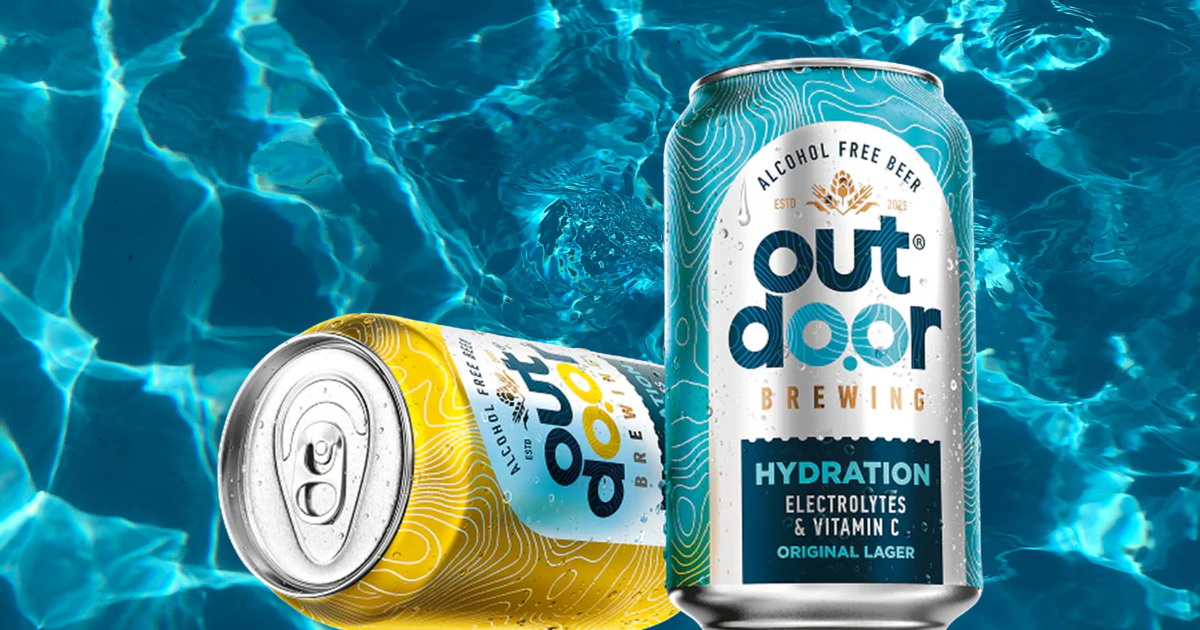
Three launches in the past month have anchored themselves on hydration rather than occasion. Lucky Saint launched a Lime & Sea Salt lager in late April, built on magnesium, potassium, and sodium. Heineken UK launched Outd00r Brewing in early May, a 0.05% ABV isotonic lager with magnesium and vitamin C. AMASS Brands Group launched AMASS Electrolyte Mixers, designed to function as a cocktail mixer, a standalone non-alc drink, or hydration on its own.
Hydration is moving from a feature inside specific SKUs to the reason a product exists. The cluster reads as a category-wide bet that electrolytes can define a competitive set. But can that competitive set define a clear occasion?
The three launches
Lucky Saint is a British indie non-alc beer brand testing a new format and channel. Its 80-calorie Lime & Sea Salt Lager bypasses retail at launch, sold exclusively via TikTok Shop and DTC, supported by Lucky Saint’s largest creator marketing effort to date.
Heineken is building a new brand from scratch rather than extending Heineken 0.0. Outd00r is Heineken’s first move into functional brewing, shipping in two variants through Ocado, Waitrose, and David Lloyd Leisure Clubs, with planned activations at run clubs and social fitness groups.
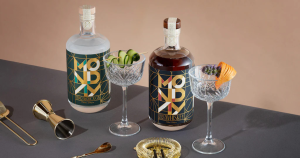
AMASS’s Electrolyte Mixers line is premium and botanically-inspired, with low sugar and clean electrolytes. The line is designed to function as a cocktail mixer, a standalone non-alc drink, or hydration on its own. Founder Mark Thomas Lynn told Dry Atlas the launch came from the insight that consumers are “reading labels” and “drinking less but drinking better.”
What aligns them: electrolytes as the central feature, not as a callout on the side panel. That’s not how non-alc launches typically read. Most product narratives lead with occasion, or with functional ingredients targeting mood and state change. These three lead with a functional ingredient that sits outside the recreational beverage category altogether.
Hydration isn’t an occasion (yet)
Alcohol alternative occasions are well-defined: meal pairing, social event, celebration, nightcap. Hydration occasions are also well-defined: post-workout, hangover prevention, long flight. The two sets don’t overlap cleanly. An SKU that sits across both asks the consumer to occupy both decision frames at once.
Most consumers reach for a drink to answer one question, and any complexity creates friction in the buying process. Non-alc’s positioning challenge has always been making it a valid choice against an alcohol default—what to drink at dinner, what to drink at the bar. Hydration positioning answers a different question: what does my body need. Electrolyte content alone does not bridge that. It signals a benefit, not an occasion.
ROLUS is the brand engineering the bridge directly. President Carl Nolet III told Dry Atlas: “Social hydration is a new concept and we’re pioneering it. Alcohol has dominated social settings for a long time, but people now want options. ROLUS fits into those moments when you want to keep the fun going, but also stay hydrated.” The test is whether “social hydration” survives contact with how consumers choose a drink.
Heineken’s separate-brand tell
Heineken’s decision to launch Outd00r as a separate brand rather than as a Heineken 0.0 extension is the cluster’s strongest signal, and it cuts two ways.
Read offensively, the separate-brand architecture says hydration is a durable category segment that deserves its own competitive set. Read defensively, the same decision says Heineken sees brand-equity risk in pulling Heineken 0.0 into the hydration space. A separate brand isolates the experiment and the downside.
That’s the asymmetry indie operators are walking into. Heineken can ring-fence the occasion liability in a separate label. Indie brands launching hydration SKUs are putting the bet on the same brand that has to carry their adult-beverage positioning.
The takeaway
For founders evaluating hydration positioning, there is one core question to consider: is electrolyte content doing the work of communicating an occasion the consumer can act on?
The bet only pays if a new occasion—”social hydration” or something like it—actually takes hold in consumer decision-making. Heineken’s architecture suggests the smart money isn’t betting that on the parent brand.