In most mature beverage categories, distribution is primarily a logistics function. Product moves from producer to shelf, and the category’s identity is already clear to the retailer and the consumer.
Non-alc doesn’t operate that way. The category lacks consistent placement logic, shared merchandising conventions, and staff fluency. In that environment, a distributor who simply moves product leaves the hardest problem unsolved.
A placement problem, not a product problem
Non-alc’s growth constraints aren’t primarily about supply or consumer interest. They’re about what happens at the point of sale: where the product is placed, how it’s defined, and whether the operator running the account has enough context to sell it.
Austin Anderson, co-founder of Dry Bar Distributing, a non-alc-only distributor in Texas, puts it directly: “Non-alcoholic isn’t a product problem. It’s a placement and definition problem at the point of sale. Success depends on whether the operator is intentionally building the category, not just stocking it.”
It’s an important distinction. A traditional distributor optimizes for coverage and velocity across a broad portfolio. Building a non-alc set—including reeducating staff and adjusting merchandising as the category evolves—goes beyond logistics. In this kind of category development work, the economics and incentives are different. Traditional distributors rarely have reason to prioritize it. Anderson frames his role accordingly: “It’s building the category inside each account.”
The incentive problem runs deeper than bandwidth. Monica Olano, founder of Cali Sober Distribution, has emphasized that traditional distributors are balancing much larger legacy portfolios and are incentivized to protect those sales, even as they enter the alcohol alternatives space. That misalignment makes it difficult to fully prioritize a category that may compete for the same shelf space, regardless of how capable the distributor is. It’s part of why dedicated distribution models are emerging across alcohol alternatives more broadly, including THC and functional beverages.
Two retail models emerging
At the retail level, two approaches are taking shape, says Anderson. Some retailers are placing non-alc products directly alongside their alcoholic equivalents, organizing around occasion. Others are building separate non-alc sets.
Anderson advocates for the former. “The retailers winning right now… are integrating it around occasion and making the decision easier for the customer,” he says.
But neither model has fully won. Occasion-integrated placement lowers friction for consumers, while a curated non-alc set signals intentionality. Both require an operator willing to make the organizational decision, which is still far from universal.
On-premise and the RTD entry point
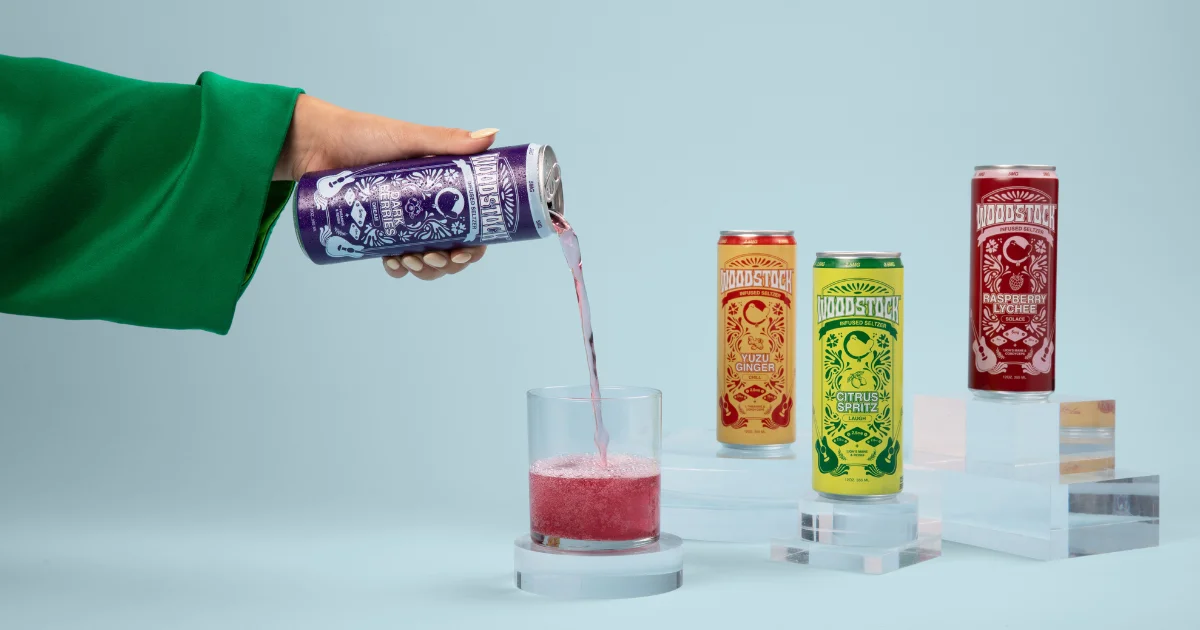
RTDs are functioning as the category’s on-premise entry point. They simplify service—no bartender training required, no pour standardization—and when positioned alongside alcoholic RTDs, they reduce the social friction around ordering.
Anderson draws a line here: “RTDs are the gateway, but they’re not the category—they’re the entry point into a much bigger program. Where it breaks down is when they’re treated like soft drinks or not supported by a broader non-alcoholic offering.”
That placement decision fundamentally changes how the product is perceived and ordered. If RTDs become the primary non-alc vehicle on-premise, they define the category’s ceiling. A broader non-alc program (like that of just-opened Alexandra Hus in Copenhagen) requires more operator commitment but generates higher per-occasion spend and stronger repeat behavior. As Olano put it: “These products require education, support, and active sell-through. If they don’t perform, they don’t stay.”
How the distribution landscape resolves
The non-alc-only versus traditional distribution question is likely a transitional argument. Anderson believes it will become a layered system: “Traditional distributors will carry product, platforms will enable discovery, and category-focused distributors will drive growth.”
That layered structure mirrors how other specialty beverage categories matured. Natural wine, craft spirits, and premium RTDs all saw similar infrastructure evolution. Early-stage specialists built account relationships and category fluency, followed by broader distribution as consumer expectations clarified and retailer confidence grew.
Coverage isn’t the variable that determines which distributors win. In Anderson’s view, “it’s going to be won by who controls placement, education, and the customer experience.” Founders evaluating distribution partnerships should be asking a specific question: are they moving product, or building the category inside each account? In a category still defining its own retail orientation, the answer determines not just velocity today, but whether the placement survives the next buyer review.