Alcohol alternatives sometimes struggle when they attempt to recreate drinks whose structure depends heavily on ethanol. Wine and spirits derive much of their mouthfeel, body, and aromatic persistence from alcohol itself. Remove it, and the product must rebuild that structure.
Spritz formats are different. They rely less on ethanol for their identity and more on bitterness, citrus, and carbonation. Those elements are easier to reproduce without alcohol, which is one reason aperitivo-style drinks have become a natural entry point for non-alc brands.
Ethanol as a structural ingredient
Alcohol does more than provide intoxication. It contributes viscosity, amplifies aromas, and carries botanical compounds across the palate. In wine and spirits, this remains difficult to replicate.
Non-alcoholic wine in particular illustrates this challenge. Once alcohol is removed, the product can feel thinner, sweeter, or muted compared with the original. Producers attempt to compensate with tannins and acidity adjustments, but it’s inherently difficult to mirror the original structure.
Similarly, distilled spirits rely heavily on ethanol for body. Without it, botanical extracts can feel watery or overly aromatic. This is why many non-alcoholic spirits work best when diluted into cocktails rather than consumed neat.
The aperitivo logic
Spritz formats are inherently diluted drinks. Even in their alcoholic form, the core experience comes from bitter citrus, carbonation, and refreshment rather than ethanol.
Aperitivo drinks historically prioritize palate stimulation over alcohol intensity. Bitterness increases salivation, citrus adds brightness, and carbonation introduces lift. These characteristics create a drink designed to open the appetite and accompany social rituals rather than showcase alcohol.
That dynamic explains why spritz beverages have become one of the most durable formats in alcohol alternatives. The experience can remain intact because the defining characteristics—bitterness, acidity, carbonation, and temperature—are fully achievable without ethanol.
Ritual without alcohol
Spritz formats also map to a clear occasion, even more specific than that of wine or spirits.
The drink is tied to a specific social moment: aperitivo. Often consumed outdoors or before dinner, spritzes are visually distinctive and sessionable. Those cues help maintain the cultural experience even when alcohol is absent.
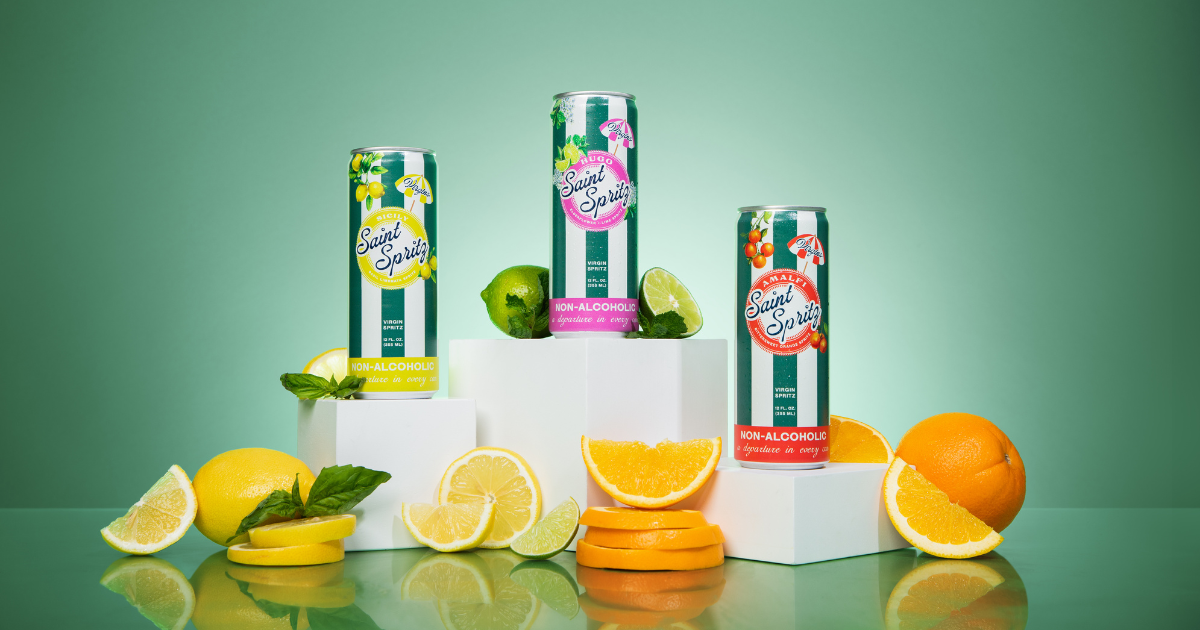
JoJo Fletcher, Co-Founder of Saint Spritz, describes this dynamic directly: “We introduced the Virgins non-alcoholic line as a natural extension of Saint Spritz because the brand has always been about the aperitivo experience—the ritual, the flavors, and the moment—not just the alcohol.”
This framing shifts the product away from alcohol substitution toward occasion participation. The drink works because it preserves the ritual.
One caveat
In the American market, bitterness remains a learned taste rather than a default preference.
European aperitivo cultures normalize bitterness early. In the U.S., most consumers are calibrated toward sweetness or lower-intensity profiles. Products that lean too aggressively into bitterness risk rejection on first trial. Ghia has addressed this directly in its consumer education, including a recent Instagram post explicitly framing bitterness as feature of the aperitivo experience, not a flaw (“You weren’t supposed to love us on the first sip”).
Push too far toward accessibility, though, and the drink begins to read as flavored sparkling water rather than an aperitivo.
Spritz formats still retain an advantage. Even with softened bitterness, carbonation and acidity preserve enough of the sensory architecture to maintain distinction. The key question is how far bitterness can be pushed without breaking adoption.