As trade policy volatility reshapes global supply chains, beverage founders are contending with new friction in their already complex operations.
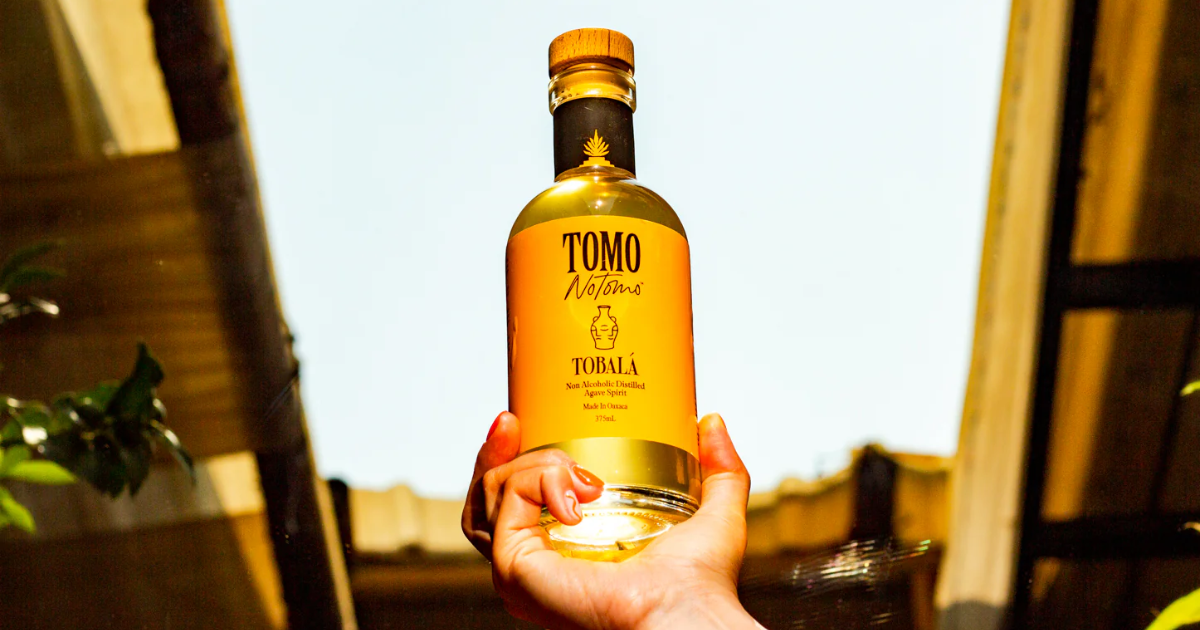
In this conversation, we spoke with Amanda Chen, founder of Tomonotomo, about how those pressures have sharpened her commitment to local production in Oaxaca, Mexico. Chen has doubled down on vertical control, country-of-origin integrity, and hands-on execution as strategic advantages.
Her perspective offers a grounded counterpoint to the common assumption that international expansion requires early outsourcing. Instead, Chen frames proximity, ownership, and operational intimacy as buffers against volatility. To her, they’re prerequisites for building a brand that can withstand regulatory, logistical, and cultural complexity as it grows.
Dry Atlas: Since we last spoke, global trade dynamics have shifted. What specifically changed for Tomonotomo in the past 6–12 months that made you rethink operations or distribution?
Amanda Chen: Luckily, we’ve been able to continue to operate as usual. We even expanded into Canada without any problems. I did think hard about pricing. Since we’re already at a higher price point, I really couldn’t imagine bringing the price higher.
It actually reinforced my position to continue operations in Mexico and focus more on local production. I did look into China for production needs such as glass bottles, but now with new tariff conversations I think I’ll just keep it local. I might have been able to save quite a bit before the tariffs, but now the prices are basically equal. It gives me more incentive to celebrate local here and maintain our authenticity as a brand 100% made in Oaxaca, Mexico.
DA: If tariffs or duties were to increase unexpectedly, what is the first lever you’d evaluate pulling, and which would you never touch?
AC: I’ll try to get a handle on all my material costs and arrange an average flat cost based on a minimum quantity order. It’ll give me a better sense of where I am and how much I’ll have to take out of my own pocket.
I’ll never completely change my location based on tariffs—I’d always continue to produce in Mexico. I wouldn’t move my production to the U.S. or another location. That’s just too crazy.
DA: How do you think about country-of-origin today: as a brand asset, an operational constraint, or both? Has that balance shifted as trade friction increases?
AC: I’m even more dedicated to being a Mexican brand today more than ever. I had thoughts of eventually expanding operations to the U.S. or another country when we’re at a higher scale, and that might still happen. But growing from the ground up here in Oaxaca has given me the experience to really bootstrap this business. In 2026, we’re off to a great start and can finally start paying ourselves, but we’ll still be working with our bootstrap mentality.
This year, I’m focusing a lot more on Mexico. The demand for NA has grown a lot over the past year and we are finally getting meetings with large hospitality groups. I think it makes total sense for them to work with the only NA agave spirit in Mexico rather than importing an NA wine from France or an NA spirit from the US. Guests want something Mexican while visiting Mexico, so let’s give them Tomonotomo!
DA: For founders early in international expansion, what is most commonly underestimated about working with importers and distributors across borders?
AC: There are so many steps involved. Luckily, I created a U.S. corporation and a Mexican corporation so that the two could do business. This way, I have eyes on both sides and there’s no middle man. There are cross border brokers, customs, FDA, compliance, labels… so many things you have to think about. If one thing isn’t right, your products will not get across the border.
A lot of people think you just sign up with an importer and they’ll handle it all from you: pick up your product from your manufacturer and then deliver it to their warehouse in whatever country. No way! You have to change your labels, figure out shipping to the border, and decide who is doing the customs brokerage. The difficulty with Canada is having to go through a whole country (USA) in transit to the final destination. Luckily, I’m Canadian, so I’ve been able to get into all three countries in North America by having a corporation in all three countries.
DA: Have you built specific buffers—financial, inventory, or contractual—to protect against volatility? If so, which ones work in practice?
AC: I want to protect myself across all parts of my business. The most important thing is to ensure that my product will be consistently made at the standard I’ve set, because I’m making it! The third party manufacturer will never suddenly go bankrupt and drop my product—that sounds like a nightmare that I’m thankful will never be my reality. I also control the export and import and the distribution of my product, so again, no one is messing with me. The good and bad of this is that I’m doing every single job, but this also helps me understand what every piece of the puzzle is. When I’m ready to expand further, I’ll know how to delegate and instruct others to follow my direction.
DA: Looking back, what is one international or operational decision you would not repeat, and what did it cost you to learn that lesson?
AC: I didn’t choose a target market right at the start.
I wanted to live and work in Oaxaca. It’s a very tourist-heavy city. That’s great, but it’s hard to create community when the people coming in are always short term. Now I’m really focusing on building my home base in Oaxaca and hosting sober agave tours, distillery visits, and even a Tomo sober bar crawl to nurture relationships with establishments that are stocking us.
I started to feel the heat of not focusing on a specific city in the US. We are beginning to do that now with New York, and I’m changing my production schedule to align with that focus. The challenge with controlling production is I have to be here in Mexico, and without a sales force I also have to be in every city trying to get people to know about Tomonotomo. I finally got a sales rep in New York that has really helped get us on the ground, and I wish I had jumped on that earlier. But it’s better late than never! I’ve learned my lesson and I’m focusing a lot more on building community this year.
DA: If you were advising a non-alc founder considering cross-border production or distribution in 2026, what is the single question they must answer honestly before proceeding?
AC: How involved do you want to be in the production process?
A lot of founders want to work 100% remotely, and I get the desire for that, but then you run the risk of random people having control over your product. You might have tried the sample and it tasted great, but then during production they’ll cut corners and your product won’t taste the same. Then you’ll have to double down and have them redo it, giving these guys even more money.
At that point, I’d suggest you cut your losses asap and find a new supplier. You have to make sure you’re super tight with who’s making your product and can trust that they’re delivering what they say they are. In the end, what do you think you’re saving costs on, and what do you think you can settle with someone taking control over? I produce my own product, export the product from Mexico, and import it into the U.S. I’m there at every step to ensure my hard work is bottled and delivered. The only thing I don’t have control over is shipping. Kike the rest of the world, I’m at the mercy of UPS, FedEx, etc. I’m okay with that. I’m not okay with people I don’t know handling my product with no eyes on it!