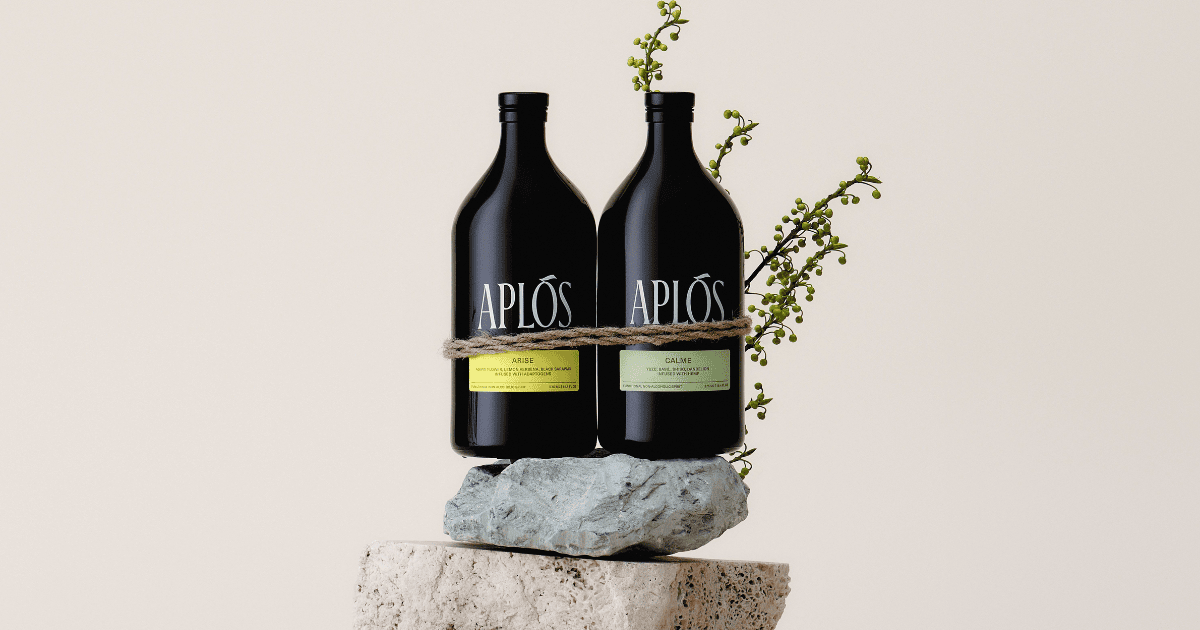
The alcohol alternatives category is growing faster than anyone could have anticipated, and Aplós has been at the center of that evolution. With a fresh $5M raise, Co-Founder Emily Onkey is charting where the space is headed next, from channel insights shaping her brand’s growth strategy to the deeper behavioral shifts redefining what a cocktail is.
In this conversation, she reflects on what she’s learned across e-commerce, retail, and on-premise, and why Aplós is betting big on a future beyond the mocktail.
Dry Atlas: Congratulations on your recent $5M raise! What concrete consumer insights supported your investor conversations for this round?
Emily Onkey: In the last couple of years, we’ve seen a meaningful shift in both consumer behavior and cultural context. What began as a niche category for sober or sober-curious consumers has evolved into a broader lifestyle choice embraced by traditional drinkers as well. The conversation is no longer about whether this is a trend. Now it’s about how nuanced taste, functional benefits, and intentional rituals are reshaping what people expect from a cocktail.
The consumer now sees non-alcoholic not as a compromise, but as an upgrade. This shift has expanded the TAM significantly and reframed the conversation with investors. We’re now talking about where this category belongs in the retail landscape—premium spirits aisle, functional beverage, even beauty—not whether it belongs at all.
DA: Are you noticing different types of consumers discovering Aplós in retail vs. on-premise vs. online? What does that say about where the category is heading?
EO: There’s definitely overlap across channels, but each one has nuance. Our highest LTV e-comm customers tend to mirror the demographic at Total Wine. Our wellness-minded buyers often show up at Sprouts. And our on-premise consumer skews more male than both e-comm and retail, which offers a different angle into the brand. We seem to be the Athletic Brewing guy’s dining-out cocktail of choice.
What’s been most valuable is how on-premise has evolved into a true brand-building space for us. It’s not just about volume. It’s about visibility, brand alignment, education, and trust.
One surprising insight: our ready-to-drink cocktails have served as an unexpected gateway for retail spirits sell-in. We didn’t anticipate that, but it’s been a compelling way to open doors for spirits placement.
The biggest signal in all of this? Retailers are no longer hesitating. They see that this isn’t a passing trend. It’s a growing category that warrants shelf space, investment, and consumer education. And the mixology community is right there, too. Two years ago, it felt like a harder sell. Today, bartenders and retail buyers are enthusiastic. That shift says a lot about where we’re headed.
DA: As major retailers expand non-alcoholic shelf space, what specific signals are you seeing that convince you retail will now deliver more efficient growth than e-commerce?
EO: E-commerce was incredibly efficient for us in our first two years. We were early to market as one of the first functional spirits in the space, and were operating in a COVID era when online shopping was not just convenient but essential. Meta performance was strong then, but it has become too unreliable to predict and scale within the black box that is today’s algorithm.
For most businesses in general, e-comm alone doesn’t scale profitably over the long term. We’re a drinks brand. Ninety-four percent of spirits purchases still happen in person. That’s a foundational insight. Being omnichannel isn’t just strategic, it’s necessary.
What gives us an edge in retail is the groundwork we’ve laid: stronger brand awareness, a clear handle on our unit economics, and DTC data that tells us exactly where we’re already over-indexing, and with which demographics. That allows us to make smarter decisions on where to invest, how to grow, and which shelves will move the needle with minimal investment.
DA: You’re seeing strong performance on-premise with accounts like the Four Seasons and Soho House. What’s changed in consumer openness to ordering non-alc in bars and restaurants compared to a few years ago?
EO: In the last five years, the cultural tide has shifted. Even five years ago, people whispered a non-alcoholic order like an embarrassing secret. When we started Aplós, my co-founder David and I heard it all the time: people—even the most confident, senior business leaders—were embarrassed to admit they weren’t drinking. They’d secretly order club soda and lime, just to avoid the old stigma that not drinking meant you were less fun.
But now that stigma is finally fading. People understand that choosing when to have alcohol and when not to doesn’t have to be a binary label. It’s about intention, about enjoying the ritual on your own terms. We should be allowed to socialize and have options that don’t come with compromises the next day.
DA: You’ve mentioned your spirits outperform RTDs on-premise. What use occasions are driving that preference?
EO: It’s about embracing the cocktail as a small luxury. Aplós is a premium spirit, and many of the places we’re served are those where the mixologist would never consider serving a ready-to-drink option. They’re crafting something bespoke. Consumers see ordering a spirit like Aplós at a high-end bar as a way to elevate their experience. It’s that touch of intention and craft that makes all the difference, turning a simple drink into a refined moment.
Who doesn’t enjoy that moment of watching a cocktail crafted just for you? The shake, the stir, the garnish. It’s a moment of intention. So in a way, the preference is driven by the desire to slow down and savor the act, not just the drink. It’s less about grabbing something off the shelf and more about knowing you’re part of a considered moment.
DA: As non-alc becomes more normalized socially, what new consumer behaviors are most interesting to you right now?
EO: Now that not drinking is no longer a statement of “I’m missing out,” we’re seeing people treat these drinks as a canvas for their own preferences. They’re mixing and matching, exploring complex flavors, and choosing to go non-alcoholic on a night out just because they can.
And then there’s this fascinating layer of micro-trends: the “weekday sober,” “zebra striping,” or “bookending.” These emerging rituals are just different ways people are playing with balance, challenging themselves to be intentional about when they drink and when they don’t. It’s interesting to watch these personal balance tools catch on because it shows that non-alcoholic isn’t just a trend. It’s part of a more nuanced, thoughtful approach to how people live.
The way things are trending, in three to five years I think “Dry January” will feel a little passé. Instead of a big pendulum swing or a once-a-year reset, people are moving toward a more fluid, everyday balance. In other words, the future looks like a world where choosing a non-alcoholic cocktail is just another part of a well-rounded life, not a dramatic seasonal correction.
DA: If you had to point to one consumer insight that Aplós is building toward that the broader market hasn’t caught up to yet, what is it?
EO: I’m really passionate about being anti-mocktail. In my mind, we’re moving past the era of mocktails and imitation versions of the “real thing.” Our vision is to create the first zero-proof, zero-compromise spirits brand—cocktails that stand toe-to-toe with the world’s best alcoholic cocktails.
We’re building on the insight that alcohol is just one functional ingredient in a cocktail. Why should we treat it like the only one that matters?