Insights from BevNET Live’s “Battle Plans: Hemp-Based Cannabevs Face 2026”
One unmistakable theme from the BevNET Live THC panel: category leaders are not rattled by regulatory uncertainty. They’re also not worried about being quashed by Big Alcohol.
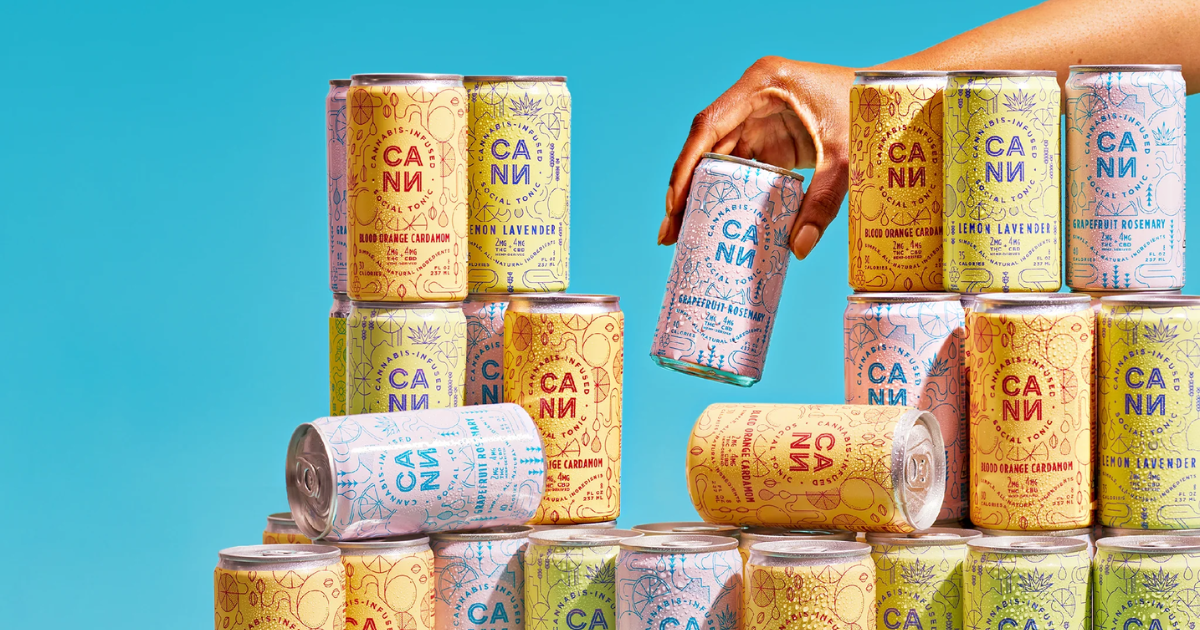
Speaking to the alcohol industry, Jake Bullock (CEO and Co-Founder, Cann) made that clear: “Alcohol consumption is in decline. We’re handing you a parachute: here is the next 50 years of your business.”
His framing permeated the conversation with other panelists Justin Tidwell (CEO and Co-Founder, Nowadays), Whitney Stevenson (President and Chief Commercial Officer, JuneShine Brands), and Mikey Mohr (CEO and Co-Founder, Houseplant). These four leaders view the current environment as a generational opening to build a durable category.
Alternatives Will Always Exist
Bullock (Cann) contextualized the entire conversation with a reminder that consumer behavior, not policy, is the true driver of this category’s longevity.
“People will always want alternatives,” he declared. “THC beverages are the best alternative, I think, because they deliver that social buzz. But if you take them away, consumers will still have the problem of wanting an alcohol alternative.”
Even in a restrictive environment, the demand wouldn’t evaporate, Bullock argued. It would simply shift. The category’s long-term trajectory is rooted in a stable behavioral need; consumers desire social drinking experiences without alcohol.
Disruption Necessarily Comes with Friction
Tidwell (Nowadays) acknowledged the inherent intensity of building in a category that challenges incumbents and regulatory frameworks
“You start knowing you’re disrupting something,” he noted. “That comes with highs and also a battle… We welcome this as a challenge to create a category that’s long-lasting. It was bound to happen and we’re ready to rise to the occasion.”
For Tidwell, turbulence is a signal that the category is real and worth fighting for.
Stevenson (JuneShine) made it clear that hesitation isn’t part of her playbook. “We’re full steam ahead. We’re going to continue to invest and move as fast as we can. We feel positive about what’s to come and we’re going to ramp up really hard.”
The Call for Regulation
The panelists were unanimous in rejecting the narrative that THC beverages thrive only in regulatory gray zones. Tidwell made the opposite quite clear. “We want regulation,” he confirmed. “I want to build a generational company. For that to happen, we need to separate the good and bad parts of our industry.”
Investment, trust, and growth all require stability.
The panelists agreed that THC beverages should ultimately be regulated like alcohol and flow through the three-tier system. To them, it’s the path to legitimacy and national scale.
The Awareness Breakthrough
While short-term policy headlines have dominated the news cycle, Mohr (Houseplant) noted that the attention has brought an unexpected advantage: “More people than ever now know you can drink THC.”
Awareness has long been one of the category’s barriers. Recent regulatory news has accelerated it far faster than marketing dollars alone ever could.
And as THC beverages expand beyond the dispensary aisles, consumer awareness comes with it. “The people drinking THC want to go to a Total Wine and buy it. They feel a lot more comfortable when they buy it at their grocery store,” Stevenson shared.
Looking Ahead
If the early 2020s were the years of experimentation, 2026 and beyond will be defined by system-building. We can expect clearer regulation and professionalized brands. With those, stronger distribution partnerships, retail normalization, and engaged consumers.
No longer a fringe category, THC beverages are articulating what the future of drinking will look like. As Bullock reminded the room, the incumbents who embrace this shift will survive and thrive.