The THC beverage category has been constrained less by demand than by distribution.
Early growth came via fragmented channels: direct-to-retail relationships and opportunistic partnerships. That model allowed brands to enter the market quickly, but it also limited scale. Execution varied by state, distributor incentives were inconsistent, and field support was thin.
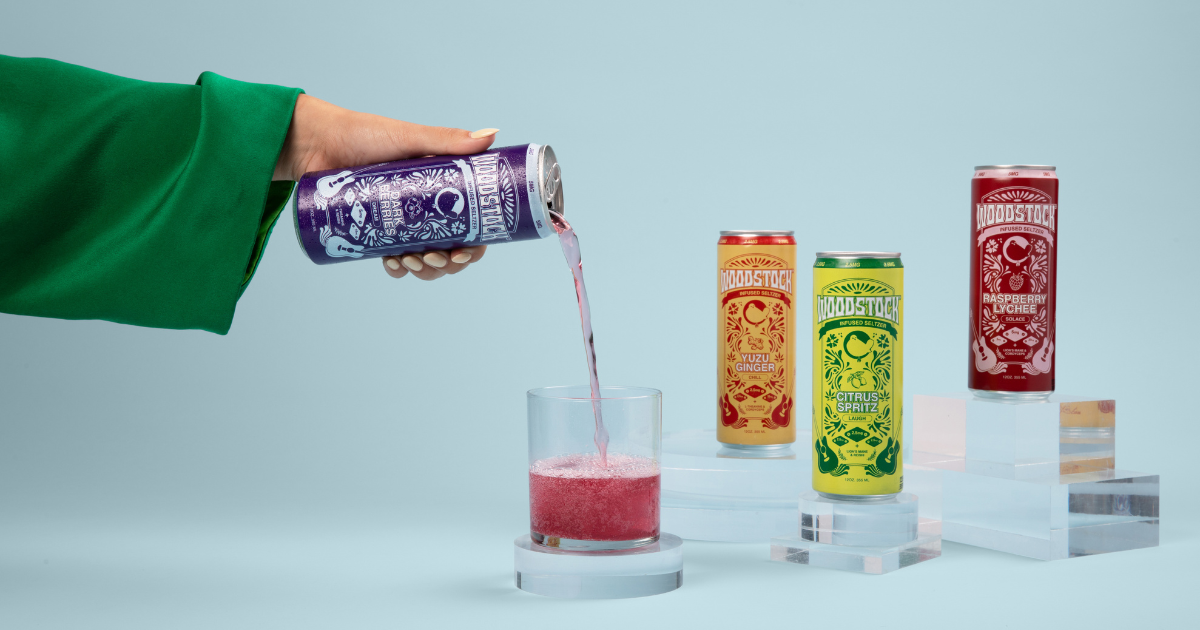
That’s beginning to change. Craft & Art Wine and Spirits, led by former Southern Glazer’s executive Kevin Fennessey, is building a dedicated THC beverage portfolio anchored by Woodstock Goods. He’s applying alcohol portfolio and distribution discipline to THC.
Fragmented distribution
The current THC beverage landscape lacks coordinated route-to-market infrastructure. Brands are often responsible for managing several functions across multiple markets simultaneously.
Fennessey describes the issue as operational. “Brands face increasing complexity around distributor management, retail relationships, pricing strategy, and in-market activations,” he says. “That can quickly become overwhelming.”
This is compounded by a lack of field presence. Without dedicated sales teams or local execution, brands struggle to maintain visibility within distributor portfolios and retail sets. “One of the biggest challenges we continue to hear… is that it’s difficult to compete and grow without dedicated feet on the street,” Fennessey explains.
Portfolio-led distribution
Craft & Art’s model attempts to address this challenge by treating THC beverages as a managed portfolio.
The logic mirrors alcohol. Rather than pursuing a single national distributor, the strategy is to coordinate state-by-state relationships while maintaining centralized oversight. “At Craft & Art, one of our core strengths is our ability to manage distributor relationships on a market by market basis with a coordinated national strategy,” Fennessey says.
This approach reflects a key constraint in THC beverages: distribution is not uniformly national. Regulatory variation forces operators to build networks market by market. The advantage comes from how those networks are managed.
From Woodstock’s perspective, this fills a structural gap that most early-stage brands cannot solve internally. “We may not have existing relationships with key distributors, or national accounts, or have the resources to support field sales and marketing across every market,” explains CEO Richard Lee. “That’s why the Craft & Art partnership was so intriguing.”
The tradeoffs
Early THC beverage brands benefited from flexibility. Smaller distributors were often more focused and willing to prioritize the category, while direct retail relationships offered margin upside.
As larger, more experienced operators enter, they promise structured distribution for scale and consistency. But “sometimes a smaller distributor may outperform a larger one because it’s focused on THC drinks,” Lee concedes.
Monica Olano, Founder of Cali Sober Distribution, highlights this tradeoff. “Traditional distributors are balancing much larger legacy portfolios, and they’re incentivized to protect those sales,” she says. “That can make it difficult to fully prioritize a category that may compete for the same shelf space.” Because Olano is focused on this space, “we’re not making tradeoffs between alcohol and alternatives. That allows us to show up as a true partner, helping retailers navigate a fast-evolving consumer shift while building a category that’s only getting bigger.”
Brands will have to choose where they sit. With direct-to-retail strategies, explains Lee, “the margin upside is real, but it can complicate your ability to sign a broader distribution deal in that state down the road.” With smaller distributors, brands may sacrifice scale for more attention. But in Olano’s view, that attention is critical: “these products require education, support, and active sell-through. If they don’t perform, they don’t stay.”
What changes from here
As experienced alcohol operators enter THC beverages, distribution centers on importance within a portfolio.
For brands, this changes the path to scale. Access alone will not be sufficient. Brands must justify their place within the portfolio to receive sustained support from distributors.
For distributors, the opportunity is to define the category’s infrastructure before it fully consolidates.
For the category itself, this marks a transition point. THC beverages are moving from a fragmented, founder-driven distribution model toward one shaped by portfolio strategy and coordinated execution. The next phase of growth will be determined by how effectively brands navigate distribution systems that increasingly resemble those of alcohol.