Presented by oHHo
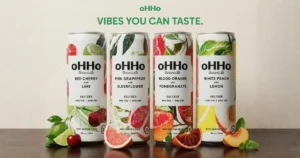
Beverage consumption is no longer governed by a single, repeated decision. The same consumer might have an infused beverage at a dinner party, reach for a tincture before bed, and choose something entirely different on a Sunday afternoon. We’ve previously described this as ABV optionality: a shift away from fixed drinking patterns and toward context-driven choice. With oHHo, that logic now extends beyond alcohol content and into delivery format itself.
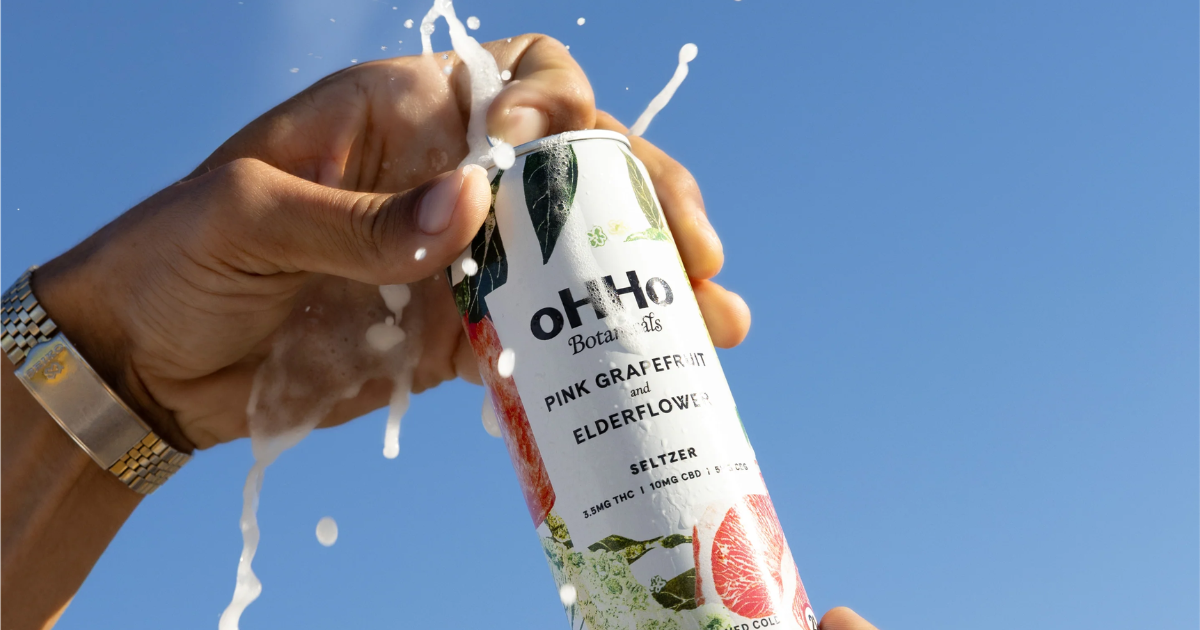
Rather than centering the brand on a single ritual, oHHo is structured around a broader need: unwinding in ways that align with different moments. Sometimes that shows up as a THC-infused beverage, particularly in social settings where a drink remains culturally legible. In other contexts, the same intent takes a different form: tinctures, chocolate, gummies—or body care, for when ingestion isn’t part of the ritual at all. The throughline is the continuity of function.
Designing for behavioral fragmentation
Unwinding is not a uniform act. It varies by time of day, by environment, and by how visible a consumer wants that choice to be. A single product category cannot cleanly map across all of those constraints. When it tries to, frequency stalls. By building across formats, oHHo allows one consumer relationship to extend across multiple use cases rather than forcing each moment into the same ritual.
Beverage remains a key lever, and for many consumers, the most culturally legible way to engage with THC, CBD, and CBG. Within oHHo’s structure, however, it operates as one expression inside a broader system. Tinctures enable precision. Chocolate and gummies serve discretion. Body care supports ritual without ingestion. The result is lateral movement across formats without fragmenting the brand relationship.
A different growth lever for functional brands
For the broader functional landscape, this approach introduces a different growth vector. Much of the category’s recent expansion has focused on increasing participation within a single format—most often beverage. Format optionality adds a second dimension: increasing relevance across more moments per consumer. Rather than competing for share within one occasion, the brand compounds frequency across several.
Optionality now includes delivery. As consumer behavior fragments across contexts, brands designed around that fragmentation can capture more than a single occasion, they can embed themselves across a consumer’s day. oHHo’s multi-format strategy reflects that shift, aligning product architecture not to category convention, but to lived behavior.