Presented by Thorium Digital
Every few months, the same conclusion resurfaces: direct-to-consumer (DTC) beverage doesn’t work. Paid acquisition is difficult, shipping is expensive, and margins are thin. Compared to apparel or beauty, beverage appears structurally disadvantaged online. On the surface, the argument is rational. But it often confuses poor architecture with a broken channel.
Retail scale does not replace eCommerce
Retail remains the primary growth engine for most beverage brands, and it should. Distribution builds access and velocity in ways DTC rarely can. But retail and eCommerce serve different roles.
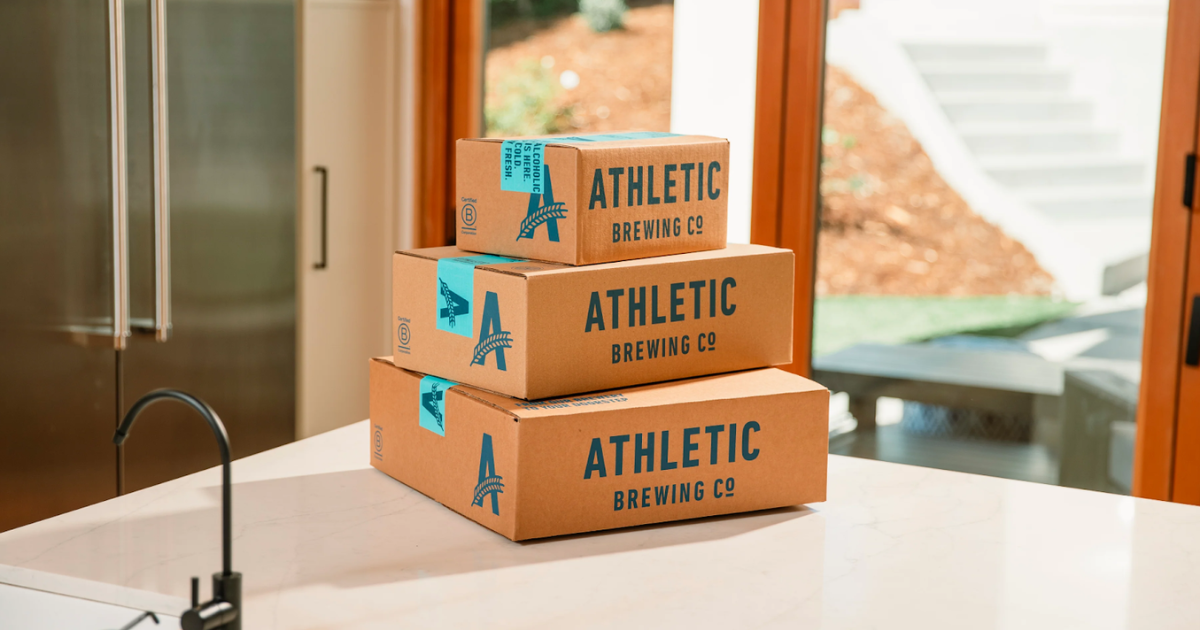
Retail builds scale and presence; eCommerce captures margin, collects first-party data, and provides a controlled environment for experimentation. Athletic Brewing has an enormous retail footprint, for example, but still uses eCommerce to test new flavor demand. For smaller brands, eCommerce also acts as a credibility layer for buyers, investors, and other industry decision makers.
Brands that struggle online often treat DTC either as a growth shortcut or as a branding surface. In beverage, it’s neither. When eCommerce is structured around real unit economics and aligned with retail strategy, it becomes a disciplined support channel rather than a liability.
Beverage operates under different constraints
Products are heavy, fulfillment costs are meaningful, and free shipping thresholds cannot be casually set without affecting margin. Price parity with retail must also be respected to avoid channel conflict. These constraints make eCommerce more complex than in adjacent categories, but they do not make it impossible.
The problem emerges when brands adopt eCommerce playbooks built for other industries and apply them without adjusting for beverage economics. Sites become optimized for storytelling rather than transaction clarity. Shipping logic is set by imitation rather than modeled from real margin data. Subscription mechanics are deployed to lift short-term conversion instead of reflecting realistic consumption cadence. When those misalignments accumulate, DTC performance deteriorates and the channel itself is blamed.
DTC works when site architecture reflects economics
In beverage, eCommerce must respect margin, support retail parity, and compress decision time simultaneously. When any one of those fails, performance suffers. When all three are aligned, DTC becomes economically rational even within the category’s constraints.
The brands that succeed online are rarely the loudest; they exhibit discipline across every site touchpoint. Levers like shipping thresholds, subscription cadence, and bundle logic are interconnected components of a strong eCommerce experience.
The more useful question, then, is not whether DTC beverage is dead. It is whether your eCommerce infrastructure reflects how beverage actually behaves.
For operators who want to evaluate that question directly, we’ve created a Beverage PDP Conversion Audit.
When you’re ready to upgrade your eCommerce experience, you need an expert in architecture and execution. Thorium Digital partners with ambitious brands to create beautiful, effective eCommerce experiences. Their team builds your bespoke online storefront, then continually refines it to ensure it’s optimized to boost your bottom line.