Presented by oHHo
Cannabis historically asked consumers to cross a meaningful behavioral threshold.
Smoking carries social baggage. Edibles can seem unpredictable, particularly to those without any tolerance. For many adults, their only interaction with cannabis dates back to adolescence, often high-intensity experiences that felt difficult to control.
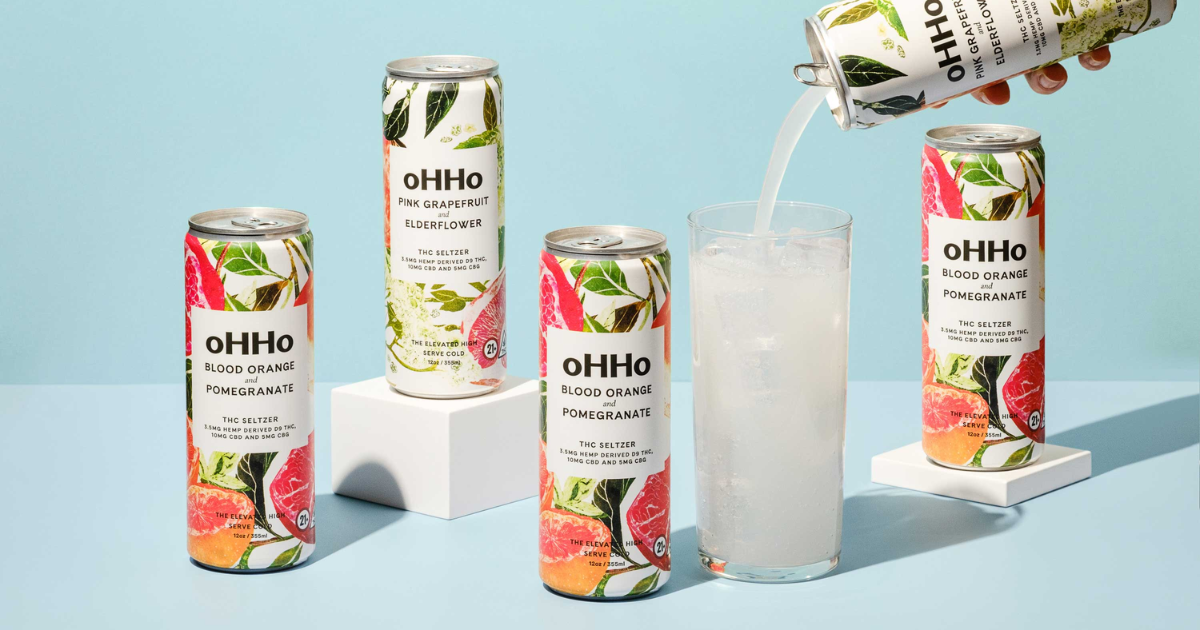
THC beverages introduce a different entry point. Borrowing a drinking ritual consumers already understand, they fundamentally change how people approach the category. For cannabis brands operating across multiple formats, beverage can increase the total addressable market.
Lowering the behavioral threshold
The adoption challenge for cannabis extends beyond access. As legalization spread, consumer comfort remained a barrier when the format felt unfamiliar or socially awkward. Both smoking and edibles created friction for those who were curious but cautious.
Beverage reduces that friction by fitting into existing behavior. The format does not require consumers to learn a new set of habits. Instead, it layers cannabis into familiar occasions such as dinners, parties, or evenings at home. Holding a drink signals participation in a social ritual that already exists. In some social settings, THC beverages are becoming an alternative to alcohol for those exploring moderation or “Cali Sober” lifestyles.
Low-dose formulations further soften the experience. Compared with many traditional edibles, beverages often emphasize controlled intensity and gradual effects, which can make the first interaction feel more manageable. “Most THC drinks use nano-emulsified cannabinoids and allow people to sip their way into a comfortable experience rather than committing to a full dose all at once,” says THC beverage retailer and bar owner Monica Olano. “That pacing gives people a sense of control.” Together, ritual familiarity and moderated dosing lower the barrier to experimentation.
The growth trajectory reflects that shift. At Stew Leonard’s Wine & Spirits, THC beverage sales rose 25% year over year in January 2026. The broader market is also expanding: Fact.MR projects the cannabis beverage category will grow from $1.6 billion in 2025 to $7.6 billion by 2035, a 16.9% CAGR.
The re-entry consumer
Another dynamic sits alongside first-time adoption: re-engagement.
Many adults experimented with cannabis earlier in life and disengaged. Their past experiences were frequently tied to high-dose edibles or smoking, both of which can feel overwhelming.
For this group, beverages create a more approachable re-entry point. The format feels measured, integrating easily into settings where alcohol once served as the default option. Rather than requiring a new ritual, beverages adapt cannabis to existing ones. Many consumers who once wrote off cannabis after a negative experience are willing to reconsider the category through a format that feels more controlled. “What we see in our shop is that many customers who walk in aren’t necessarily brand-new to cannabis, but they’re often returning after a challenging edible experience,” Olano notes.
Multi-format portfolios as edge
If beverages act as an entry point, the strategic question becomes what happens next.
Consumers who become comfortable with cannabis through beverage may eventually explore other formats depending on their preferences and environments. Some may want greater dosing precision. Others may prioritize discretion. Still others may prefer non-ingestive rituals.
Brands structured around a single format risk losing that consumer relationship as preferences evolve. Multi-format portfolios address that challenge by allowing the same brand to remain relevant across different contexts.
oHHo’s product architecture reflects this progression. Infused beverages operate as a familiar introduction, particularly in social settings. Chocolates and gummies offer a more discreet experience. Tinctures allow precise dosing and private use. Body care extends the unwinding ritual without ingestion at all. Each format serves a different purpose, while the underlying function—relaxation—remains consistent.
Expanding participation vs. capturing share
Much of the cannabis industry still competes within existing format silos. Beverage brands versus other beverages. Edibles versus edibles. If beverages are reducing the behavioral threshold for experimentation, the competitive frame may be shifting.
Instead of simply reallocating demand among formats, beverages may introduce consumers who previously remained outside the category altogether. Others may return after years away, reconsidering cannabis through a format that feels more predictable and socially integrated. Olano is observing this dynamic in real-time at her retail store: “When we first opened, beverages were our top-performing products. As our customer base has stabilized and matured, edibles have become our top-performing category for the past 90 days.”
For brands positioned across multiple formats, this shift creates a powerful growth model: beverages bring consumers into cannabis, while adjacent products retain them as preferences evolve.