Presented by Free Spirits
Non-alcoholic spirits are entering a more exacting phase where repeat, not trial, is the constraint.
Consumers who have experimented with non-alc spirits are now evaluating them against a higher bar. That shift changes the job of the brand. Liquid decisions can no longer be one-time milestones. Instead, they must become ongoing operating choices.
Free Spirits offers a clear example of what that looks like in practice.
Raising the bar: structure, balance, and mixability
In early category growth, substitution was enough. If a product approximated the aroma of gin or the warmth of bourbon, it cleared the hurdle. That is no longer sufficient.
A non-alc bourbon must carry through dilution in an Old Fashioned. A non-alc tequila must hold structure in a Margarita, where citrus and sweetener expose imbalance immediately. A non-alc gin must remain distinct in a Negroni, where bitterness can flatten weaker formulations.
Free Spirits has iterated its portfolio with those use cases in mind.
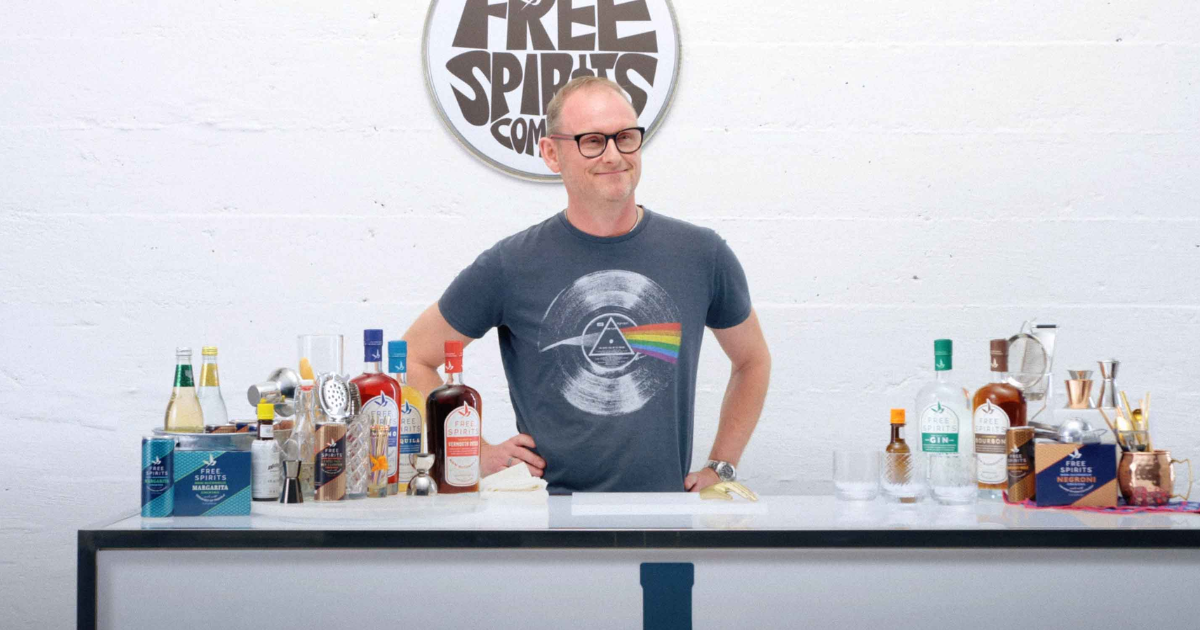
Its Bourbon is designed to perform in stirred cocktails, where viscosity and oak character need to withstand ice and dilution. Its Tequila emphasizes agave-forward notes and spice so that it remains present against lime and triple sec in a Margarita format. Its Gin maintains botanical clarity to avoid disappearing in high-acid or bitter builds.
Their competitive moat is formulation refinement tied directly to cocktail performance.
Evolution over time
Rather than relying on SKU proliferation to drive growth, Free Spirits has focused on improving the core liquids themselves.
Over time, the brand has adjusted formulation to improve mouthfeel, balance, and mixability, responding to consumer and bartender feedback. Early-generation non-alc spirits across the category often leaned too thin or too sweet. Iteration corrects those imbalances without destabilizing the brand’s identity.
That discipline does introduce risk. Reformulation can create inventory complexity and retailer friction. It can also confuse repeat buyers if not communicated clearly. But Free Spirits has addressed that risk by keeping its portfolio coherent while refining what is inside the bottle. The strategy signals restraint: deepen the liquid before widening the lineup.
The functional layer
Free Spirits now incorporates a proprietary “reBel” blend, led by Vitamin B12, into its portfolio.
The inclusion is positioned as occasion support: an energy-forward complement to social drinking contexts.
Functional inclusion in non-alc spirits can easily tip into overclaiming or ambiguity. Free Spirits keeps its communication direct, identifying the functional components clearly rather than implying effects through suggestive branding alone. As consumers scrutinize ingredient panels more closely, that transparency becomes part of the retention strategy. If a brand is adding function, it must also defend it.
Iteration as competitive advantage
In a category that has exited novelty, brands that treat formulation as fixed will struggle. Liquids are now compared not only to alcoholic benchmarks but to second- and third-generation non-alc competitors.
Therefore, smart execution shifts from launch velocity to refinement velocity. Free Spirits’ approach illustrates what operating in this phase requires. Their lineup is a living system that evolves alongside consumer expectations.