Last year, we outlined why coffee remained an underused ingredient in alcohol alternatives. It’s a high-frequency ritual, a well-understood functional delivery mechanism, and a flavor capable of doing work that few other ingredients can.
Two recent espresso-forward RTD entrants—Esspo and Esprizio—are worth examining side by side. They represent distinct strategic bets on how coffee translates into the premium beverage category.
Esspo: occasion precision as a launch thesis
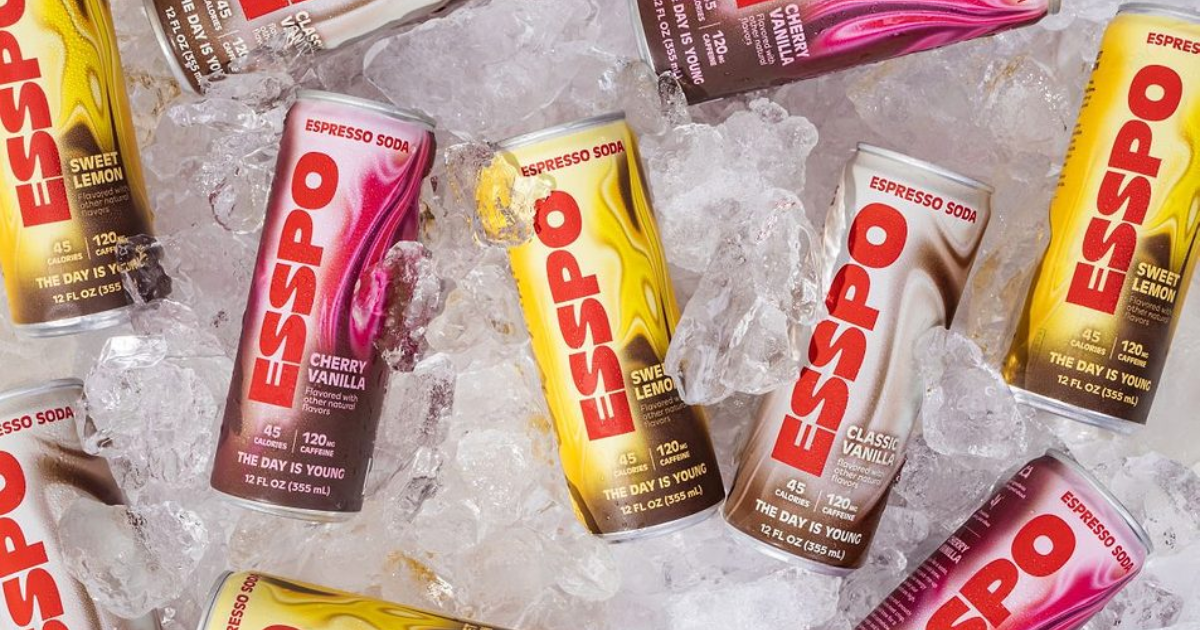
Esspo is a sparkling espresso soda. Its three SKUs—Sweet Lemon, Cherry Vanilla, and Classic Vanilla—are built around cold brew extract, L-theanine, and 120mg of caffeine per can. What’s most notable is the positioning discipline.
Esspo doesn’t position itself for just any occasion. It positions itself for one: the afternoon energy slump. The language is consistent across their site: “The afternoon revival,” “Crash at 3 p.m.? Couldn’t be us.” Consumer reviews mirror that framing without prompting: multiple describe “2 p.m. Esspo time” as a newly formed habit.
By staking out a single daypart, Esspo is trying to solve a specific consumer problem and anchor repurchase behavior around a recurring occasion. While a brand optimized for one window limits its own use case, the bet is that occasion specificity drives repeat purchase more reliably than occasion flexibility. For an early-stage DTC brand, that may be correct.
Esprizio: cocktail logic, expanded daypart
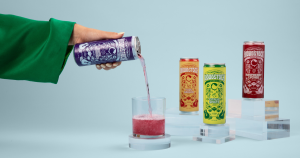
Esprizio takes a structurally different position. Described as a “sparkling espresso spritz,” its SKUs—Blood Orange, Tangerine Chocolate, and Grapefruit—are built around cocktail-adjacent flavor profiles and 75mg of caffeine.
In sharp contrast to Esspo, they recommend “Anytime Enjoyment. AM or PM — the choice is yours.” The visual language pulls toward social occasion rather than functional utility. Copy describes flavors in cocktail vocabulary: “bold espresso mingles,” “inspired by Italy’s iconic spritz.”
Esprizio is positioning coffee not as an energy delivery system but as a cocktail ingredient. That expands the relevant occasion window and taps into the espresso martini’s cultural moment without the alcohol. The risk is familiar across the beverage industry: “anytime” positioning can collapse into no occasion at all. Without a clear mental trigger for when to reach for it, the purchase stays aspirational rather than habitual.
The positioning fork
These two brands illustrate a recurring strategic choice in early-stage non-alc: specificity versus breadth.
Esspo competes with the third cup of coffee, the energy drink, and the afternoon soda. It wins by being a better version of all three for a specific window. The L-theanine inclusion reinforces that frame: caffeine without jitter, optimized for productivity rather than stimulation alone.
Esprizio is betting that social occasion framing unlocks broader use and premium pricing. At $36.99 per 6-pack, it’s nearly twice as expensive as Esspo, but the cocktail anchor and organic credentials are designed to earn placement in a different purchase context entirely.
Neither approach is wrong; they’ll succeed or fail on different metrics. Esspo needs to build a daily habit in a specific time slot and convert it into high reorder velocity. Esprizio needs to earn a place in the social occasion repertoire. That’s a harder behavioral shift, but one that carries higher per-occasion spending when it works.
For founders entering adjacent territory: occasion discipline is not a marketing decision. It determines which consumer behavior you’re attaching to, and therefore which competitive set you’re actually in.