
For over ten years, Dry January has functioned as a cultural entry point for non-alcoholic drinks. The month-long reset created a tidy narrative that made space for a category still trying to justify itself. That framing helped non-alc break through. It gave consumers language, retailers a hook, and brands a predictable moment of demand.
But recent moves by pioneering brands underscore what we believe to be broadly true: Dry January is losing its centrality as non-alc becomes part of everyday drinking.
The brand signals
Over the past few months, several leading brands have leaned away from abstinence messaging altogether.
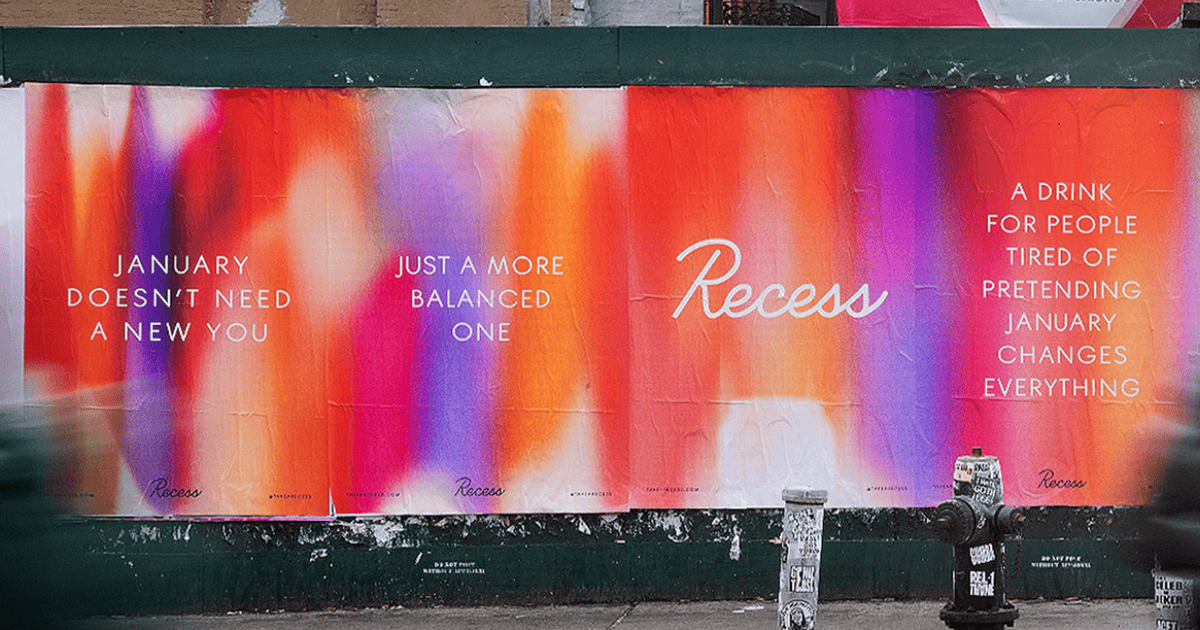
Ghia called Dry January “cancelled… spiritually.” Free Spirits suggested it would soon feel obsolete. Recess ran a full-page New York Times ad with the message “you don’t need a new you,” pushing back on the idea that January requires reinvention. Seedlip founder Ben Branson put it more bluntly: “We don’t need Dry January. Drinking has changed. Choice has changed. The options are better — ALL YEAR ROUND.”
Taken together, moves like these point to a category recalibrating its center of gravity.
From constraint to optionality
As Aplós co-founder Emily Onkey told us, in a few years Dry January may feel “passé” as people adopt a more fluid relationship with alcohol reduction.
That idea also surfaced in our recent conversation with Ghia founder Melanie Masarin. In Ghia’s latest customer survey, 92% of respondents identified as alcohol drinkers, not abstainers. They aren’t looking to quit. They’re looking to moderate in ways that feel sustainable and enjoyable.
For those consumers, month-long challenges are blunt instruments. They don’t reflect how people actually drink, or how they want to drink going forward.
Masarin also described a broader issue with how non-alc has historically positioned itself. When the category defines itself by absence, it risks stripping away the emotional reason people reach for a drink in the first place. People don’t drink only for intoxication. They drink to mark moments, to participate, to slow down. Products that fail to engage that context struggle to earn repeat behavior.
The Dry January tradeoff
None of this means Dry January has stopped “working.” It still drives trial and introduces new consumers to the category. For many brands, January remains one of the highest-velocity months of the year.
But it also reinforces a limiting idea: that non-alc is temporary, a corrective phase rather than a permanent part of someone’s repertoire.
OOSO’s co-founder captured the risk succinctly when he declared that Dry January has become synonymous with sacrifice. That framing, he argued, undermines the case for non-alc as something people choose rather than endure.
Brands that lean heavily into Dry January face a strategic tradeoff. They benefit from heightened attention, but at the cost of anchoring their products to abstinence rather than habit.
That tension is already visible. Ghia’s recent Dry January cancellation messaging sparked criticism from some longtime followers, including comments warning the brand not to alienate early supporters who embraced Dry January as an entry point. The reaction highlights a real challenge: how to move forward without disowning the past.
What this means for brand building
For non-alc brands, the implications are straightforward:
- Dry January can no longer be the organizing principle.
- Messaging built around flexibility will resonate with a much larger audience than abstinence-only or even moderation-based framing.
- Execution will matter more than slogans. Liquid quality, occasion fit, and repeatability will determine which brands graduate from trial to habit.
- And tone matters. Moving away from Dry January doesn’t require dismissing the consumers who relied on it. It requires acknowledging that the category has outgrown a binary it once needed.
Dry January helped non-alc establish itself. But as the category integrates into everyday life and the broader beverage landscape, its role is shrinking. What comes next is more demanding: earning a permanent place in the fridge, on the menu, and in people’s routines, no challenge required.