Presented by LOKI
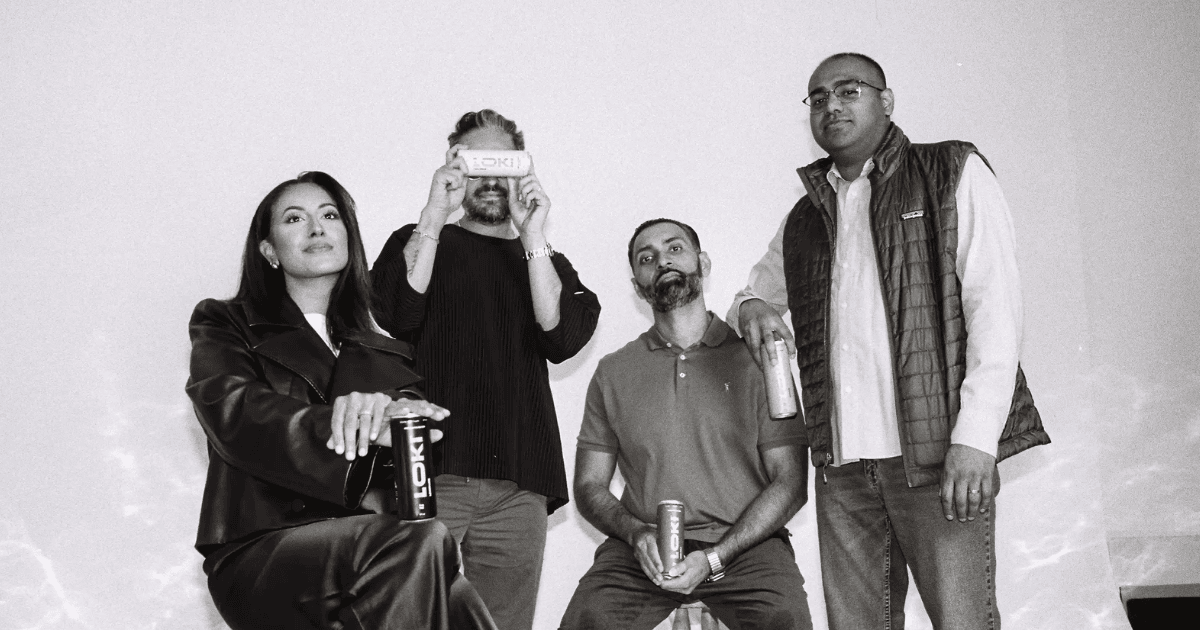
LOKI launched in 2021, before THC beverages had a category to call their own. Founded by three partners with backgrounds spanning cannabis distribution, pharmaceuticals, and brand building, the company has grown without outside capital, learning expensive lessons on their own dime while the regulatory ground shifted beneath them.
In this conversation, the team reflects on what it took to build a brand in a nascent category, why they’ve never positioned themselves against alcohol, and what separates the brands that endure from those that fade.
Dry Atlas: When you launched, THC beverages weren’t a recognized category. What was the strongest early signal that told you it would emerge?
LOKI Team: When we first launched, we had deep experience in cannabis, but none of us had formally launched a beverage brand before. What made it work was the combination of our backgrounds. One co-founder came from cannabis and beverage distribution, another from the pharmaceutical world, and the third has experience building and scaling brands for the past decade. Together, we were able to move fast and cover blind spots that other companies have to hire for.
The earliest real signal came before the product even existed. We ran a small campaign to test demand and sold nearly 2,000 cans in the first week. That told us there was real pull. But the moment it truly felt real was when we signed our first distribution deal. Having a licensed distributor put their business on the line for us enough validation that we were onto something major. It wasn’t just consumers believing in the product, it was other operators seeing real demand and backing it.
DA: Before there was clear demand or precedent, what operational risk felt heaviest in those first months? What convinced you to keep going anyway?
LT: Regulation was easily the heaviest risk early on. We launched at a time when the rules were unclear, and even small mistakes, like label language, could result in thousands of dollars of product being pulled from shelves. We spent a lot of time and money with lawyers and trade organizations to get the language right, knowing that in the worst-case scenario, we could lose money but fix it and re-run production.
The other big risk was cost. Beverage businesses are expensive, especially when you’re learning things like can linings and formulation compatibility the hard way. We made plenty of mistakes early, but we made them on our own dollar. We never took outside capital, which meant we could learn, fail-forward and have agency across every decision without burning anyone else.
What kept us going was simple: we built this product for ourselves. We wanted something that tasted great, felt clean, and didn’t come with hangovers or regret. And even back in 2020, we were seeing early signals that alcohol alternatives were going to be a major category, especially as younger generations started drinking less.
DA: You’ve emphasized that LOKI isn’t trying to replace alcohol. What problem were you trying to solve when you started the brand?
LT: Alcohol isn’t going anywhere. It’s been around for so long, and anyone claiming they’re going to replace it is missing the point. What we wanted to do was offer more options. Something psychoactive, social, and enjoyable, but with far less downside than alcohol.
On a personal level, we didn’t want to smoke, didn’t want gummies loaded with sugar, and didn’t want to step outside in the cold or announce to the world what we were doing. We wanted something discreet, low-key, and clean that fit into our lives naturally. That’s the problem we were solving. Giving people another option without pretending alcohol needs to disappear.
DA: You’ve talked about ritual and social context as central to consumption. How deliberately did you design LOKI to fit into existing social rituals rather than create new ones?
LT: Very deliberately. All of us live social lives, whether through hospitality, music, or creative work. We constantly saw friend groups split into smokers outside and drinkers inside. We wanted to bridge that gap and keep everyone together.
LOKI was designed to sit in the middle of how we already live. You’ll see it in green rooms at festivals, at members clubs, or at dinners and social gatherings. We didn’t want to invent new rituals. We wanted to slide seamlessly into existing ones and let people choose how they participate.
DA: Your products emphasize experience over intoxication. How did you define the boundary between “felt effect” and “impairment” when formulating?
LT: A lot of trial and error. Our earliest batches were much higher doses, around 20 milligrams, and we quickly learned that wasn’t the experience we wanted. Most of us have been cannabis users for over 20 years, and we don’t enjoy “overdoing it,” if you will.
For the majority of our audience (ourselves included), the sweet spot is low dose and slow, balanced consumption. That allows people to feel something without losing control. If someone wants more, they can have another LOKI. But getting obliterated from a single drink completely ruins the experience. Everyone has a bad edible story. We didn’t want to create another one.
DA: LOKI often shows up in cultural spaces rather than traditional beverage channels. Was that a distribution decision, a brand decision, or both?
LT: It was primarily a brand decision that happened organically. These are the spaces we’re already in as founders, whether that’s music, hospitality, or fine dining. We didn’t force our way into cultural spaces. We’re just being ourselves and letting the brand exist where our audience naturally spends time.
While traditional distribution channels are very important for the industry, they tend to follow culture, not lead it. We’re comfortable letting that happen on its own time.
DA: Regulation heavily shaped what’s possible in this space. How are you viewing the regulatory landscape going into 2026?
LT: Going into 2026, the landscape is expanding rapidly as consumers and operators both in and out of the category are becoming much more aware of THC beverages. So honestly, we want more regulation. Right now, the industry lives in gray areas, and almost everyone is dancing around them. Clear rules would allow operators to act in black and white instead of constantly guessing…and enable us to build more trust with our existing and expanding audience.
We’ve always tried to stay ahead of regulation, monitoring inventory, depletion rates, and staying ready to react if things change. We’ve bought back inventory before and would do it again. Our reputation matters more than short-term profit. We treat our partners like family, because we’ve seen firsthand what happens when vendors don’t.
DA: As THC drinks become more mainstream, what do you think will differentiate brands that endure from those that fade?
LT: It comes down to story and community. You can buy a Casio or a Rolex. They both tell time, but only one carries meaning. Brands that endure are the ones people feel connected to, not just ones they can find on a shelf.
A lot of brands disappear not because they failed, but because founders stop. We built LOKI because we genuinely need it in our lives. Even if it’s just for us and the people loyal enough to keep drinking it, we’ll keep going. That mindset is what lasts.
DA: What’s your vision for LOKI in five years?
LT: It’s simple. When you say energy drink, people think Red Bull or Monster. When you say cannabis beverage, we want LOKI to be the first thing that comes to mind.
That only happens through long-term brand equity, consistency, and taking care of the people behind the brand. Selling millions of cans matters, but supporting the families of our employees matters just as much.
In the next five years and beyond, we will continue to connect, create and enhance the social experience.