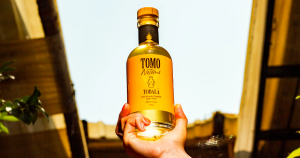

Presented by Kava Haven
Kava is not new. It has been consumed ceremonially across the Pacific Islands for thousands of years. What is new is its emergence as a scalable beverage category in the U.S.
Kava sits in a unique position in the modern beverage landscape. It delivers a perceptible calming effect without intoxication, cognitive impairment, or federal regulatory restriction. For consumers seeking social ease without loss of control, that combination is compelling. But kava only works as a category at scale if people understand it.
The perception gap
Kava’s active compounds, kavalactones, interact with the nervous system in a way that produces measurable anxiety-reducing effects without sedation or intoxication. Unlike alcohol, it does not impair cognition. Unlike CBD, its effects are typically immediate and noticeable. Unlike THC, it remains federally legal and avoids the regulatory volatility that limits mainstream distribution.
But kava still carries residue from outdated safety narratives, particularly about liver health and dependency. While contemporary research and long-standing traditional use do not support those narratives when consumed responsibly, the echoes remain. Kava brands must educate without amplifying fear and demonstrate efficacy without hype.
Signals of category validation
Against that backdrop, recent retail behavior is notable.
Sophisticated regional and national buyers—including Central Market, Metropolitan Market, and Raley’s—are no longer treating kava as an experiment. In many of these doors, it is emerging as a top-performing product in the broader non-alcoholic set. These are retailers with high standards for velocity, shopper education, and repeat purchase. Their willingness to give kava shelf space signals that the category is beginning to earn operational credibility.
Importantly, this momentum isn’t being driven by an explosion of SKUs or formats. It’s being driven by brands that prioritize clarity over range.
Kava Haven’s focused approach
Kava Haven’s strategy reflects an understanding of where the category is today.
Rather than rushing into line extensions, the brand is currently focused on a single core product. In a space still defining shared language and usage norms, that focus reduces cognitive load for both wholesale buyers and consumers. One product, executed consistently, does more to establish expectations than a fragmented portfolio could at this critical juncture for kava. Positioned as a base spirit rather than a novelty ingredient, Kava Haven helps anchor expectations around occasion and effect.
Distribution choices reinforce the same logic. By prioritizing specialty retailers and non-alcoholic bottle shops where education is already part of the shopping experience, Kava Haven effectively extends its own education layer through trusted intermediaries.
None of this is accidental. In a category where misunderstanding is still the biggest risk, focus becomes a moat.
What category leadership requires
Kava’s trajectory suggests a broader lesson for functional beverages: they mature through trust, and the brands that lead them are the most disciplined.
For kava, that means continuing to replace legacy narratives with experience, grounding claims in repeatable outcomes, and letting serious retail adoption do the talking. Kava Haven’s progress points to what that kind of leadership looks like in practice. As kava settles into its role, the advantage will accrue to brands that make it easier to understand, trust, and return to.